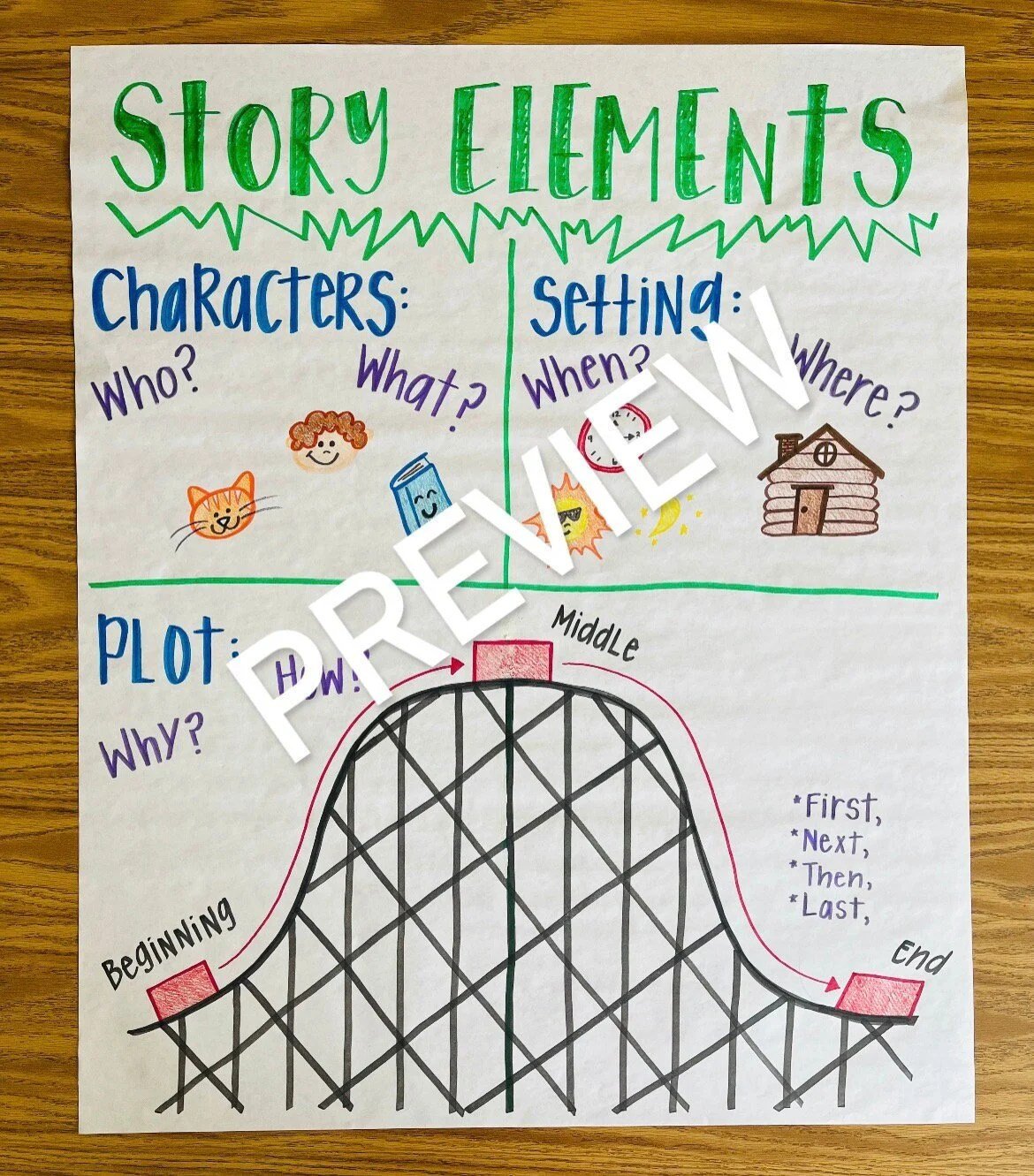
Every captivating narrative, from ancient myths to the latest binge-worthy series, pulls us in with an irresistible force. It's not magic; it's masterful engineering. At the heart of this engineering lies a deep understanding of Plot, Storyline & Original vs. New Elements, the fundamental building blocks that dictate how a story unfolds, what it means, and how fresh it feels. Whether you're a budding novelist, a seasoned screenwriter, or just someone who loves dissecting a good tale, grasping these concepts transforms you from a passive consumer to an active architect of stories.
Let's unpack the core mechanics that drive every compelling narrative, helping you craft stories that resonate deeply and stand the test of time.
At a Glance: Crafting Your Narrative Masterpiece
- Stories are Systems: Every element—character, setting, plot, theme—interconnects. Change one, and the others shift.
- Plot is "What Happens": It's the chronological sequence of events, driven by cause and effect, propelling the narrative forward.
- Storyline is "How it Feels & Why": It encompasses the plot but also includes character arcs, thematic development, and the emotional journey.
- Embrace the Familiar, Innovate the New: Original elements (tropes, archetypes) provide comfort; new elements offer surprise and freshness.
- Conflict is King: Without struggle, there's no story. Ensure conflict, internal and external, permeates your narrative.
- Know Your Perspective: Point of View shapes how your audience experiences the truth of your story.
- Your Voice Matters: Style is your unique fingerprint, making your story distinct.
The Essential DNA of Every Story: Key Elements in Action
Before we dive into the precise sequencing of events, let's establish the eight foundational pillars upon which all narratives are built. Think of these as the fundamental ingredients you need for any successful story, each playing a crucial, interconnected role.
Crafting Compelling Characters: The Heartbeat of Your World
No story truly lives without characters we can invest in. They are the protagonists, antagonists, and supporting players who drive the action and reflect the themes. A truly compelling character isn't just a placeholder; they have a clear goal, face formidable obstacles, harbor flaws or misconceptions, and, crucially, undergo a transformation—a character arc—by the story's end. Your characters don't even have to be human; their complexity and relationships are what matter.
- Actionable Insight: Pinpoint your main character's core desire, the biggest hurdle blocking them, their defining flaw, and how they will irrevocably change by the final scene.
Grounding Your Tale: The Power of Setting
The "where and when" of your story is far more than just background scenery. Setting encompasses the physical location, the specific time period, and the cultural context, all of which actively shape your characters and drive conflict. A crumbling, oppressive cityscape, for instance, might perfectly mirror a theme of moral decay, while the constraints of a specific historical era can naturally generate compelling struggles. Make your setting feel lived-in by showing, not just telling, through vivid sensory details.
- Actionable Insight: Define the implicit and explicit rules of your setting—its physics, its social norms, its emotional landscape. Then, explore how breaking or bending those rules ignites your story's momentum and creates problems for your characters.
The Engine of Events: Understanding Plot
At its core, Plot is the structured sequence of cause-and-effect events that gives your story its momentum. It's the "what happens" of the narrative, a carefully constructed chain reaction designed to pull the audience forward. A plot often follows a recognizable framework: a character's desire leads to conflict, which brings about a revelation, ultimately sparking change.
- Actionable Insight: Outline the major "if this, then that" moments. Does each event logically lead to the next, ratcheting up tension or changing the stakes?
The Spark of Drama: Conflict
Without Conflict, a story simply wouldn't exist. It's the problem, the struggle, the opposition that transforms a character's simple desire into a gripping struggle. Conflict is the engine of engagement and should ideally be present in every significant scene.
- Types of Conflict:
- Internal: The character battles their own beliefs, fears, or desires (Character vs. Self).
- External: The character faces an opposing force outside themselves. This can be Character vs. World, Antagonist, Nature, Society, Technology, the Supernatural, or even Fate.
- Interpersonal: A specific form of external conflict where one character's goals or values clash directly with another's.
- Actionable Insight: Identify the primary conflict for your protagonist. Then, list at least three minor conflicts that arise directly from it, challenging your character in different ways throughout the rising action.
The Story's 'Why': Exploring Theme
Theme is the overarching message, the moral argument, or the author's viewpoint on how people should navigate the world. It's the "why" behind the story. Rather than lecturing, a strong theme subtly reveals itself through character actions, their consequences, and the profound beliefs the protagonist (and, by extension, the audience) is forced to confront.
- Actionable Insight: If your story had a single, powerful statement you wanted readers to ponder after finishing, what would it be? Use your characters' journeys to explore different facets of this idea.
Setting the Mood: The Role of Tone
Tone is the emotional "flavor" or "temperature" of your story—the feeling that lingers after every line, paragraph, and scene. It's meticulously crafted through your word choice, the pacing of your sentences, and the imagery you evoke. Crucially, your story's tone must align with its theme and resonate with your intended audience, whether it's somber, humorous, thrilling, or lighthearted.
- Actionable Insight: Choose three adjectives that best describe the emotional impact you want your story to have. Now, review your prose: does your language consistently reinforce those adjectives?
Whose Eyes See What: Point of View (POV)
The Point of View (POV) is the lens through which your story is told, dictating what the audience sees, knows, and believes. It profoundly shapes how readers experience your story's world and whose "truth" they are exposed to.
- Common Types:
- First Person: "I did this." Told from a character's direct perspective, offering immediate access to their emotions and internal thoughts.
- Third Person Limited: "He did this, thinking..." The story is told through the eyes of a single character, using "he" or "she," providing a balanced yet focused insight.
- Third Person Omniscient: "The king smiled, though his advisor knew he felt dread." The narrator is "all-knowing," seeing and knowing everything across all characters and events.
- Second Person: "You walk into the room." Less common, using "you" to create an immersive, often intimate experience, frequently seen in interactive fiction.
- Actionable Insight: Consider what your chosen POV hides or misinterprets. The narrator's blind spots or biases can add layers of mystery, suspense, or irony to your narrative. For instance, a character's biased first-person account of a grand ball might dramatically differ from an omniscient narrator's objective truth, much like the differing perspectives that can emerge when considering adaptations like the Live-action Princess and the Frog.
Your Unique Fingerprint: The Importance of Style
Style is the author's unique "fingerprint" or voice, the distinctive way you tell a story. It's defined by your specific word choices, the length and rhythm of your sentences, the nuances of your dialogue and its subtext, and your recurring use of symbolism or motifs. Your style is what gives your story its distinct personality and makes it unmistakably yours.
- Actionable Insight: Take a pivotal paragraph from your current work. Now, rewrite it three times, each in a drastically different style—perhaps minimalist, then poetic, then humorous. Observe how these stylistic shifts impact the tone, pacing, and core meaning of the scene.
The Blueprint of Progress: The 5 Elements of Plot
While the 8 key story elements define the components of your narrative, the 5 plot elements detail the sequence of how those events unfold, forming the classic story arc.
- Exposition: The World Unveiled
The beginning of your story, where you gently introduce your world, establish the core characters, set the scene, and hint at their initial goals or daily routines. This is where you lay the groundwork, allowing your audience to orient themselves before the real journey begins. - Rising Action: Building the Stakes
Triggered by an inciting incident (the event that kicks off the main conflict), this is where the bulk of your story's action and conflict unfold. Events here progressively build tension, develop character relationships, and raise the stakes, leading inexorably towards the story's peak. Every choice, every challenge, every victory or defeat here serves to push the characters further into their central struggle. - Climax: The Point of No Return
The undeniable height of your story, the peak of tension and emotional intensity. This is the moment your main character confronts and typically addresses the major conflict head-on. It's the critical turning point where the outcome hangs in the balance, and there's no going back. A complex narrative might even feature multiple climaxes before the ultimate resolution. - Falling Action: The Aftermath
Immediately following the climax, the falling action sees the consequences of that peak event begin to unfold. Remaining conflicts or character arcs start to resolve, and the emotional fallout of the climax plays out. This isn't always a neat tying up of loose ends; new, smaller conflicts might emerge, or some issues may intentionally remain unresolved, setting the stage for future installments. - Resolution or Denouement: The New Normal
The conclusion of your story. Here, the major conflicts are either fully resolved, bringing a sense of closure, or intentionally left open, perhaps for a cliff-hanger or to ponder deeper questions. The resolution establishes the "new normal" for your characters, showing how they've changed and what their world looks like after the journey they've undertaken.
Plot vs. Storyline: A Clarifying Distinction
The terms "plot" and "storyline" are often used interchangeably, but understanding their subtle differences can empower you to build richer narratives.
- Plot: The "What Happened" (The Events)
As we've discussed, the plot is the sequence of events—the cause-and-effect chain that moves the narrative forward. It's the skeleton of your story, the factual occurrences: "The hero received a mysterious map, went on a quest, fought a dragon, and found the treasure." It focuses on external actions and their direct results. - Storyline: The "How it Felt" and "Why it Mattered" (The Journey)
The storyline encompasses the plot but layers on deeper meaning, emotional arcs, and thematic development. It's not just what happened, but how it impacted the characters, what they learned, and what message it conveyed. "The weary hero, haunted by past failures, reluctantly accepted a mysterious map, hoping the quest would redeem him. He wrestled with his inner demons while battling the dragon, not just for treasure, but to prove his worth, ultimately discovering that true redemption lies in self-forgiveness." The storyline is the rich tapestry woven around the plot's framework. It includes character transformation, the unfolding of subplots, and the exploration of themes.
Think of it this way: The plot is the chronological series of photographs. The storyline is the emotional, interpretative album those photos compose, complete with captions, reflections, and the journey of the photographer. A strong narrative needs both: a robust plot to keep the reader engaged in the action, and a compelling storyline to keep them invested in the characters and the deeper meaning.
The Art of Blending: Original vs. New Elements
One of the greatest challenges and joys of storytelling lies in balancing the familiar with the fresh. No story is truly "100% original"; we build upon archetypes, tropes, and narrative structures that have resonated for millennia. The magic happens when you infuse these original elements with new elements—twists, perspectives, and innovations that surprise and delight your audience.
Leveraging Original Elements: The Comfort of Archetypes and Tropes
Original elements are the well-trodden paths, the universal themes, and the instantly recognizable character types and plot devices that audiences instinctively understand.
- Archetypes: These are universal patterns of human experience and behavior. The Hero's Journey, the Wise Mentor, the Evil Overlord, the Damsel in Distress, the Rebel—these are timeless molds that provide an immediate connection. Using an archetype effectively gives your audience a shorthand for understanding character motivations and roles.
- Genre Conventions: Every genre comes with its own set of expectations. In fantasy, you expect magic, quests, and mythical creatures. In a detective story, you anticipate a mystery, clues, and a determined investigator. Fulfilling some of these conventions provides comfort and fulfills audience expectations, allowing them to settle into your narrative world.
- Classic Tropes: The "chosen one" prophecy, the rags-to-riches tale, forbidden love, the sudden betrayal, the mentor's sacrifice—these are narrative shortcuts that can propel a story forward without extensive setup, as readers already grasp their implications.
The benefit of original elements is immediate accessibility and a sense of shared human experience. They provide a recognizable framework.
Introducing New Elements: The Thrill of Innovation
While familiarity is comforting, predictability can be dull. New elements are your opportunity to subvert expectations, offer fresh perspectives, and inject genuine surprise.
- Twists on Tropes: Instead of a chosen one, perhaps the prophecy was a lie, and the unchosen one must save the day. A "damsel in distress" might actually be the mastermind.
- Genre Blending: Combine elements from disparate genres (e.g., a sci-fi Western, a romantic horror). This unexpected fusion can create entirely new narrative landscapes.
- Unique Settings/Cultures: Transport your audience to a meticulously crafted world with its own physics, social structures, or magical systems that defy common fantasy or sci-fi clichés.
- Unexpected Character Takes: What if your villain has deeply sympathetic motivations? What if your hero is deeply flawed, perhaps even unlikeable, but still strives for good?
- Innovative Narrative Structures: Experiment with non-linear timelines, multiple unreliable narrators, or unconventional storytelling devices (e.g., epistolary novels, documentary style).
- Fresh Thematic Angles: Explore universal themes (love, loss, power) through a lens that hasn't been widely explored, perhaps from the perspective of a marginalized group or an unusual philosophical viewpoint.
The skillful storyteller doesn't merely copy old patterns; they reinterpret, invert, and innovate. They use the foundation of original elements to give their audience a foothold, then introduce new elements to take them on an unexpected and memorable journey.
The Art of the Blend: Why It Works
The most enduring stories expertly balance the familiar with the novel.
- Relatability + Engagement: Original elements provide relatability and allow the audience to quickly connect. New elements provide the "wow" factor, keeping them engaged and guessing.
- Structure + Creativity: Archetypes offer structural integrity, while unique twists demonstrate your creative voice and vision.
- Comfort + Challenge: Audiences enjoy stories that feel familiar in some ways, but they also crave being challenged, surprised, and shown something they haven't seen before.
When you fuse a classic "journey to the underworld" (original) with a setting that is a hyper-futuristic digital consciousness (new), you create something both recognizable and utterly unique. This is the essence of building narratives that resonate for generations.
Weaving the Tapestry: Interconnectedness and Application
Remember, all these elements—the 8 story ingredients, the 5 plot stages, and the blend of original and new elements—don't exist in isolation. They form a dynamic ecosystem. Changing one element will inevitably ripple through and affect the others.
- A character's transformation (Character) might necessitate a shift in the story's overall message (Theme).
- An unusual setting (Setting) might introduce entirely new forms of conflict (Conflict) or demand a unique narrative style (Style).
- A surprising plot twist (New Element within the Plot's Rising Action) will alter the character's journey (Storyline) and potentially even the story's ultimate message (Theme).
Strong stories achieve a delicate balance, integrating all elements seamlessly to create coherence, emotional depth, and profound purpose. When one element feels weak, strengthening it often causes others to align and improve, like tuning an instrument.
Auditing Your Narrative: A Practical Checklist
As you outline or revise your story, actively audit each element:
- Characters: Are their goals clear? Are their flaws relatable? Do they change in a meaningful way?
- Setting: Does it actively contribute to the conflict or theme? Is it vivid and sensory?
- Plot: Is there a clear cause-and-effect chain? Does the tension build effectively towards the climax?
- Conflict: Is it present in every major scene? Are there both internal and external struggles?
- Theme: What message is emerging? Is it shown, not told?
- Tone: Does the emotional atmosphere consistently match your intent?
- POV: Is the chosen perspective serving the story best? What information is being revealed or withheld?
- Style: Does your voice feel authentic and distinct? Does it enhance the reading experience?
- Original vs. New: Where have you relied on familiar tropes? Where have you injected genuine innovation or subversion? Is the balance effective?
Pitfalls to Avoid
- Plot for Plot's Sake: Events happen without emotional weight or character impact.
- Characters Without Agency: Protagonists who are merely tossed by circumstances, rather than making choices that drive the plot.
- Preachy Themes: Lecturing the audience instead of letting them discover the message through the story.
- Inconsistent Tone: Jumps between moods that disorient the reader.
- Over-reliance on Tropes: A story that feels like a carbon copy, offering no fresh perspective.
- Innovation Without Grounding: New elements that are so abstract or disconnected they alienate the audience.
Your Narrative Journey Begins Now
Understanding the intricate dance between Plot, Storyline & Original vs. New Elements isn't about fitting your creativity into a rigid box; it's about gaining mastery over the tools of your craft. It empowers you to dissect why stories work, diagnose why they sometimes fail, and, most importantly, build narratives that are not just engaging, but truly unforgettable.
Every great story is a conversation between the familiar and the surprising. By conscientiously developing your characters, grounding them in a vivid setting, crafting a compelling plot that drives a meaningful storyline, and skillfully blending the timeless with the novel, you can forge narratives that resonate, inspire, and entertain. Now, go forth and tell your story—with intention, clarity, and the full power of these foundational elements at your command.